Auckland EyeTuesday, 17 Mar 2026
GLP-1 Medications and Your Eyes: What You Need To Know
Using GLP-1 medications for diabetes or weight loss? Learn how they may affect your eyes and when to seek advice.

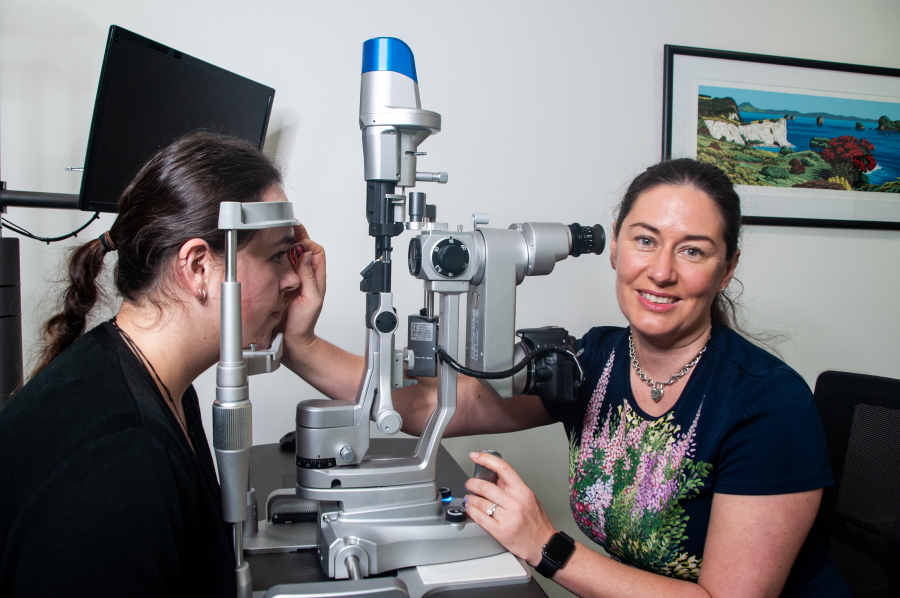
We are delighted to celebrate an important milestone for Dr Rachael Niederer, who has been promoted to Associate Professor at the University of Auckland. This achievement reflects more than two decades of dedication to ophthalmology through research, clinical practice, teaching, mentorship, and leadership.
For Associate Professor Niederer, this promotion reflects many years of commitment to the university and the communities she serves.
“I have been working at the University of Auckland since 2005 when I commenced my PhD and have been involved in teaching, research, supervision and mentoring for over 20 years. I’m really delighted to see this recognition of my contributions, and the contributions of my team, over this time there.”
It also represents a new stage of personal and professional growth.
“To me this title reflects growth, not just in teaching and outputs but also in responsibility to helping shape the environment and provide mentorship for those coming through. It is both humbling and exciting.”
Associate Professor Niederer’s academic path was shaped by strong mentors who demonstrated how clinical work and academic work can enhance one another.
“I had some excellent mentors in Professor McGhee and Professor Danesh-Meyer that showed me how valuable combining clinical and research work can be, and the long-term effect that excellent teaching can have on our discipline. My clinical work informs everything I do, the way that I teach and the research questions I want answered.”
This connection between clinic and research continues to underpin all aspects of her work.
Associate Professor Niederer is passionate about projects that lead to meaningful, patient focused outcomes. Much of her work has centred on herpes zoster (shingles) eye disease, where her research has helped clarify long term consequences and identify ways to prevent vision loss.
She is also committed to making routine ophthalmic care safer for large numbers of patients, including work to improve cataract surgery and intravitreal injections.
Alongside this, Rachael is deeply committed to understanding the epidemiology of eye disease and preventable vision loss in New Zealand, especially when it can guide more equitable access to care.
When asked about a project she is especially proud of, one example stands out.
“That’s a hard question because there are many projects I care deeply about. But one I’m particularly proud of is work that led to a significant reduction in infection rates filling intravitreal injections (for age-related macular degeneration, diabetes and vein occlusion). Through a series of small, incremental improvements, we have more than halved the infection rate, making a very common procedure safer for around 20,000 patients per year. It is not flashy work, but it has a real, tangible impact that matters a lot to me.”
Her clinical encounters regularly drive her research ideas, and her research findings flow back into patient care.
“My academic work is very directly driven by my clinical practice. When a question comes up in clinic and I can’t find a clear answer, or when a patient asks something we genuinely don’t yet know, that often becomes a starting point for a research question. The results then feed straight back into how I care for patients, whether that’s refining management decisions, counselling, or long-term care.”
When it comes to balancing clinical practice, research, and teaching, she prefers a different word.
“Balanced is probably too generous a word! It is more about integration. I try to align my clinical work, research and teaching so that they work together rather than compete. I have an incredible team around me that helps me concentrate on the important stuff and I try to be very intentional about how my time is used.”
There is plenty to look forward to in the coming years. Two large scientific projects are already underway, one exploring the role of Vitamin D in uveitis recurrence and another investigating the association between shingles and dementia. Both studies have the potential to shape future approaches to care.
Along with the research, a new professional focus is emerging.
“Just as importantly, I’m looking forward to spending more time on mentorship, teaching, and supporting colleagues with their career progression. That feels like a natural and very satisfying next phase.”
Her guidance for those starting out in ophthalmology or research is simple and generous.
“Find good mentors, and don’t be afraid to ask! I’ve been incredibly fortunate to have generous mentors throughout my career, and their guidance has made a huge difference. People are often much more willing to give their time than you expect, and having someone to help you navigate decisions, setbacks and opportunities is invaluable.”
Please join us in congratulating Associate Professor Rachael on this significant and well-deserved achievement. Her dedication to patient care, research and teaching continues to advance the field of ophthalmology and improve the lives of patients throughout New Zealand.
Click here to learn more about Associate Professor Rachael Niederer.
Auckland Eye
Thursday, 5 Feb 2026
 Auckland EyeTuesday, 17 Mar 2026
Using GLP-1 medications for diabetes or weight loss? Learn how they may affect your eyes and when to seek advice.
 Auckland EyeMonday, 16 Mar 2026
Cataract surgery can restore clarity and improve daily life. Discover what the procedure involves and what to expect throughout your treatment journey
 Auckland EyeMonday, 16 Mar 2026
Your overall health and eye health are closely connected. Here are five common conditions that can affect your vision and long-term eye health.