Auckland EyeWednesday, 19 Aug 2026
Is Blue Light Bad for Your Eyes?
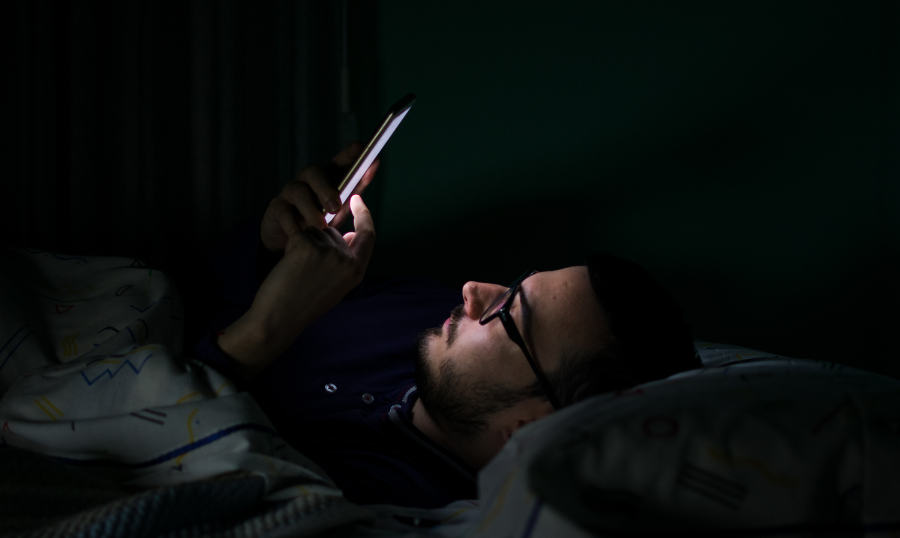
Is blue light bad for your eyes? Find out what's really causing that tired, gritty feeling after screen time, and what fixes it.

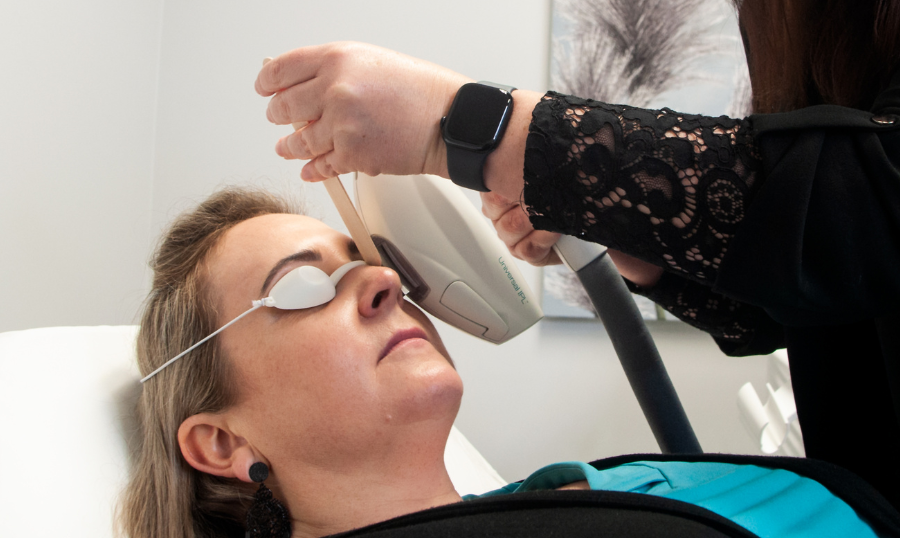
For many patients with evaporative dry eye, lubricating drops provide only temporary relief. They ease the discomfort but do not address what is actually causing it. Intense Pulsed Light (IPL) therapy takes a different approach, targeting the underlying dysfunction in the eyelid glands responsible for keeping the tear film stable.
For the right patients, IPL can produce meaningful and lasting improvements. This article explains how it works, what to expect from treatment, and whether it may be appropriate for you.
The surface of the eye is protected by a delicate tear film consisting of three layers that work in harmony to keep the eyes well-lubricated and ensure clear vision. The oily outer layer, produced by the meibomian glands along the eyelid margins, is particularly important. It slows evaporation and keeps the other layers stable.
When the meibomian glands become blocked or inflamed, the quality of this oily layer deteriorates. Tears evaporate more quickly, and the surface of the eye becomes irritated. This is known as evaporative dry eye, one of the most common forms of dry eye syndrome, accounting for approximately 80 per cent of cases.
Common symptoms include:
Watery eyes may seem counterintuitive, but irritation on the surface of the eye can trigger reflex tearing, a response that does not actually lubricate the eye properly.
IPL uses carefully controlled pulses of broad-spectrum light applied to the skin around the eyelids and upper cheeks. Originally developed for dermatology, it is now widely used in eye care to manage evaporative dry eye caused by meibomian gland dysfunction.
At Auckland Eye, the Lumenis Optima IPL system is used as part of dry eye management for suitable patients. This Israeli-designed and manufactured device offers more precise energy delivery and can treat both the upper and lower eyelids, differing from many other IPL systems used in New Zealand. The Lumenis Optima is also the only IPL technology approved by the FDA for the treatment of meibomian gland dysfunction (MGD). It is the preferred device of Dr Rolando Toyos, a leading international authority on MGD and IPL treatment.
The treatment works through several mechanisms. The light energy targets and closes the small abnormal blood vessels around the eyelids that carry inflammatory signals to the glands. It also softens hardened oils trapped inside blocked meibomian glands, allowing them to flow more freely. IPL can also reduce Demodex mites on the eyelids, a common and often overlooked contributor to chronic eyelid irritation and gland dysfunction.
Unlike lubricating drops, which mainly provide temporary symptom relief, IPL aims to restore healthier gland function and a more stable tear film.
IPL is generally considered an effective treatment for evaporative dry eye caused by meibomian gland dysfunction, and clinical evidence supports its use. Studies have found that the majority of suitable patients experience a meaningful reduction in symptoms such as burning, grittiness and blurred vision after completing a course of treatment. A systematic review of randomised controlled trials has concluded that IPL produces a clinically relevant improvement in dry eye symptoms compared to no treatment.
Results vary between patients and depend on several factors: how long symptoms have been present, the severity of gland dysfunction, and the extent of any existing gland damage. Patients with significant eyelid inflammation or ocular rosacea often respond particularly well.
IPL works best for evaporative dry eye. Patients whose symptoms are primarily caused by insufficient tear production rather than poor tear quality may require additional or alternative treatments.
IPL is performed in the clinic and does not require sedation or significant recovery time. A typical course involves four to five sessions spaced a few weeks apart. Many patients notice improvement after the first couple of sessions as inflammation begins to reduce and gland function improves.
At each session, protective shields are placed over the eyes before treatment begins and a cooling gel is applied to the skin. Pulses of light are then delivered to the areas around the eyelids and cheeks. Most patients find the procedure comfortable, with the sensation often described as a mild flicking feeling against the skin.
Afterwards, some mild redness or warmth around the treatment area is common and usually settles within a few hours. It is advisable to wear sunglasses and apply sunscreen to the cheeks for a week following each session, as the skin can be temporarily more sensitive to light.
Because dry eye is often a chronic condition, some patients benefit from periodic maintenance sessions after completing their initial course to sustain results over time.
Results from IPL tend to build gradually over the course of treatment rather than appearing immediately. For patients who respond well, improvements in tear film stability and comfort can be sustained for a significant period after completing treatment, with some studies reporting benefits lasting up to two years.
Dry eye is a chronic condition that can fluctuate over time. Ongoing eyelid hygiene, lifestyle adjustments and occasional maintenance treatments all help to sustain the improvements achieved through IPL.
IPL may be appropriate for patients who:
IPL is not suitable for everyone. It may not be appropriate for patients with certain skin conditions, and those with darker skin tones should be aware of a small risk of temporary pigmentation changes in the treated area. A thorough assessment before treatment is essential to confirm it is both safe and suitable for your individual circumstances.
Depending on the underlying cause and severity of symptoms, IPL is often combined with other treatments to achieve the best outcome.
LipiFlow uses controlled heat and gentle pressure to help clear blockages in the meibomian glands and encourage better oil flow into the tear film.
ABMAX cleans the eyelid margins to remove bacterial build-up, debris and biofilm that contribute to ongoing inflammation and gland dysfunction. Improving eyelid hygiene at the source, it creates better conditions for the glands to function properly and supports the results of other treatments.
Lubricating drops, warm compresses and lifestyle adjustments, including regular screen breaks and staying well hydrated, can also help support tear film stability between treatments.
Dry eye is rarely straightforward, and the most effective treatment depends on understanding what is driving your symptoms. For patients with evaporative dry eye and meibomian gland dysfunction, IPL offers a way to address the underlying problem rather than simply managing day-to-day discomfort.
Auckland Eye dry eye assessments evaluate tear film quality, eyelid health and gland function to determine the most appropriate treatment pathway for each patient. If you have been living with persistent dry eye symptoms without lasting relief, an assessment is the right place to start.
 Auckland EyeWednesday, 19 Aug 2026
Is blue light bad for your eyes? Find out what's really causing that tired, gritty feeling after screen time, and what fixes it.

 Eye ConditionsFriday, 17 Jul 2026
Choosing laser eye surgery? Learn the recovery differences between SMILE Pro, LASIK and PRK to help you make an informed decision.
Learn the risks of delaying cataract surgery and when to seek treatment.