Auckland EyeWednesday, 19 Aug 2026
Is Blue Light Bad for Your Eyes?
Is blue light bad for your eyes? Find out what's really causing that tired, gritty feeling after screen time, and what fixes it.

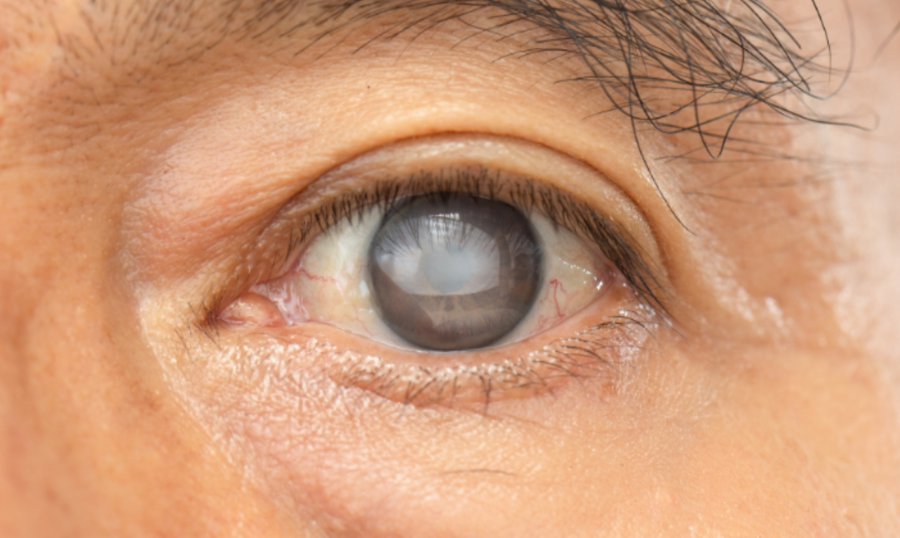
Cataract surgery is one of the most commonly performed elective procedures in New Zealand, with demand projected to grow as the population ages. Yet many people delay seeking treatment. When vision changes gradually, it is easy to keep adjusting and assume you are still getting by. But waiting longer than necessary can affect your vision, your safety, and your daily life in ways that are easy to overlook until they become harder to ignore.
Understanding the risks of delaying cataract surgery can help you have a more informed conversation with your eye specialist about when the right time to act might be.
A cataract develops when proteins in the eye’s natural lens break down and clump together, causing the lens to cloud over. In a healthy eye, the lens sits just behind the iris and focuses light onto the retina, producing clear vision. When it loses that clarity, light can’t pass through properly, and vision problems begin to develop.
Although cataracts are closely associated with ageing, certain factors can cause them to develop earlier or progress more quickly. These include a history of eye infections or disease, previous eye injuries, prolonged UV exposure, diabetes or other long-term health conditions, use of certain medications such as steroids, and a family history of cataracts.
Common cataract symptoms include:
Some people hold off because they are worried about the surgery itself. Cataract surgery is one of the most commonly performed eye operations in New Zealand. It is carried out under local anaesthetic with just eye drops or, if you prefer, with the vision temporarily blanked out, and the eye muscles paralysed, and most patients go home the same day with no stitches required. Some people believe a cataract needs to be advanced before anything can be done fully. In reality, surgery is recommended when vision starts to interfere with daily activities or quality of life, not at any particular stage of development. Waiting until a cataract becomes very dense doesn’t make surgery easier; it makes it more difficult.
Vision Continues to Decline
Cataracts left untreated do not improve on their own. As the cloudy lens continues to worsen, vision keeps declining. Reading, recognising faces, working on screens, cooking, and getting around independently all become progressively harder. While new glasses may offer some relief in the early stages, they can’t treat the cataract itself. Only the surgical removal of the cloudy lens can restore the clarity that has been lost.
Driving Becomes Less Safe
Cataracts affect contrast sensitivity and make it harder to handle glare, particularly from headlights at night. Reading road signs clearly, detecting hazards, and feeling confident behind the wheel all become more difficult as the cataract grows. These are real safety concerns, not just for you, but for everyone else on the road.
The Risk of Falls Goes Up
Good vision plays an important role in balance and spatial awareness. Steps, uneven surfaces, and obstacles in your path are easier to miss when your eyesight is impaired. For older adults, a fall can have serious and lasting consequences, from fractures to a loss of independence. Addressing cataracts in good time is one of the most practical steps you can take to protect your safety and maintain the ability to live independently.
Surgery Can Become More Complex
When a cataract is left to harden and become very dense, surgical complexity increases. A denser lens requires more effort to break down and remove, which can increase surgical risk and affect the recovery process. Early surgery, before a cataract reaches an advanced stage, generally leads to a more straightforward procedure and a smoother, faster recovery.
Other Eye Conditions Become Harder to Monitor
A very dense cataract can make it difficult for your specialist to examine the structures at the back of the eye clearly. This is particularly important if you have other eye conditions, such as macular degeneration or diabetic eye disease, that require ongoing assessment. In some patients, an enlarging cataract can also put pressure on the eye’s drainage system and contribute to increased eye pressure, raising the risk of glaucoma. Your eye specialist will discuss any specific concerns relevant to your individual circumstances.
Timely cataract surgery is important because the longer the treatment is delayed, the greater the impact on vision and overall quality of life. Surgery is usually considered when vision loss begins to affect daily activities or quality of life. The decision is made together by the patient and their surgeon, based on individual symptoms and needs.
It may be worth speaking with an eye specialist if:
A thorough eye examination will help your specialist understand how your vision is affecting your life and what the right next step looks like for you.
Because cataracts develop so gradually, it is easy to keep adapting without realising how much has changed. Delaying treatment does not slow the condition down. Vision will continue to decline until the cataract is addressed, and early intervention gives you the best chance of a straightforward procedure and a smooth recovery.
If cataracts are starting to affect your daily life, the team at Auckland Eye is here to help. With over 20 specialist ophthalmologists and clinics across Auckland and Queenstown, we can assess your vision, explain your options, and work with you to find the most suitable path forward.
 Auckland EyeWednesday, 19 Aug 2026
Is blue light bad for your eyes? Find out what's really causing that tired, gritty feeling after screen time, and what fixes it.

 Eye ConditionsFriday, 17 Jul 2026
Choosing laser eye surgery? Learn the recovery differences between SMILE Pro, LASIK and PRK to help you make an informed decision.

Diabetic retinopathy can progress slowly or rapidly depending on blood sugar control and overall eye health. Learn the signs and treatment options.